George Mathieu(1921–2012)
“Speed, intuition, excitement: that is my method of creation”
Artist Biography
Georges Mathieu was born on January 27, 1921 in Boulogne-sur-Mer, France, and died in 2012. A self-taught painter and theorist, he came to the visual arts via philosophy, having studied law and literature before beginning to paint in 1942. His first canvas, Oxford Street by Night (1942), was figurative, but he soon devoted himself entirely to abstraction, abandoning figural representation in pursuit of what he called "the freest possible creative forms" to "liberate art."
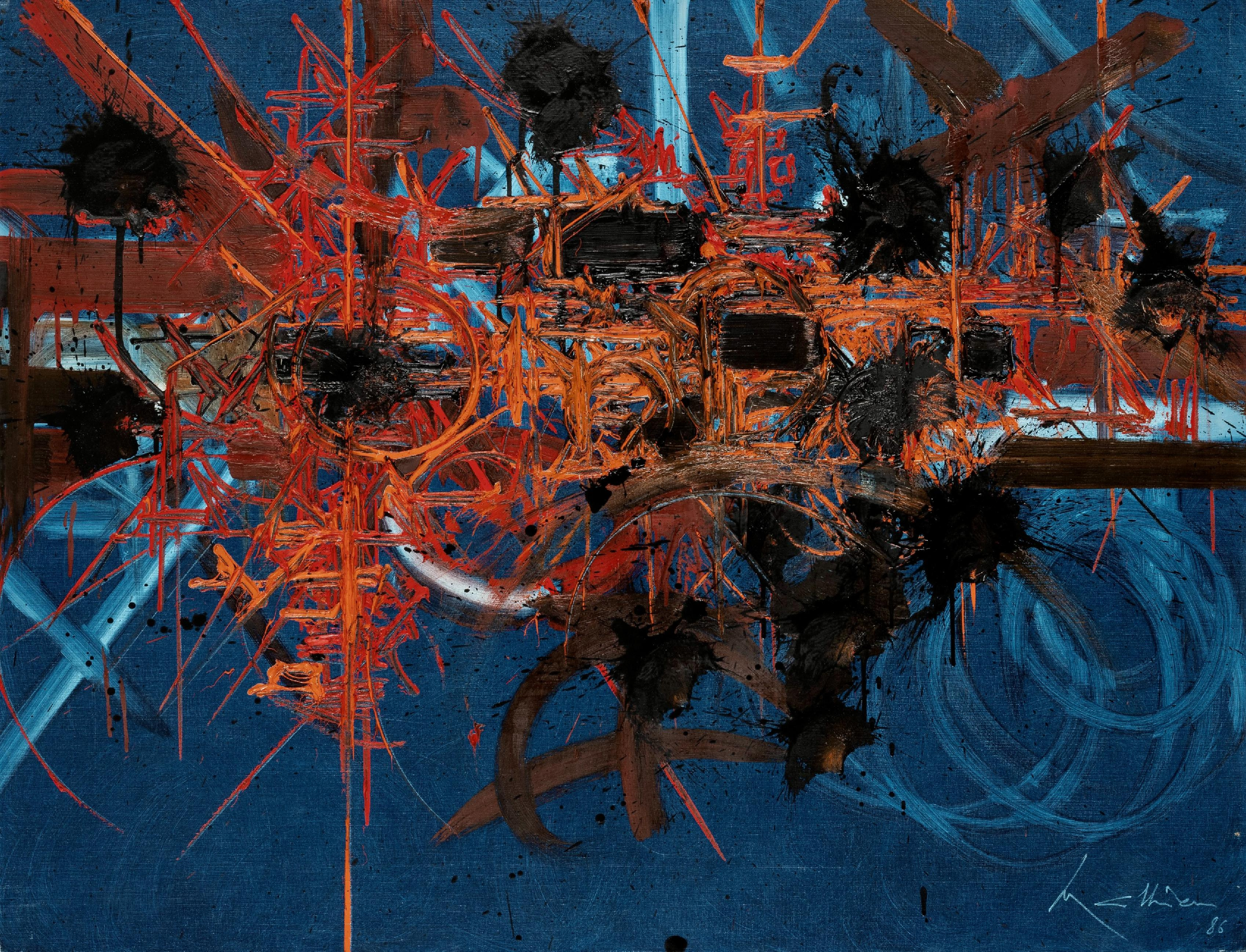
Mathieu is recognized as the father of Lyrical Abstraction (Abstraction Lyrique), a movement he pioneered in the late 1940s as a counterpoint to Geometric Abstraction. He described it as a form of painting liberated from the constraints of figuration, emphasizing the act of painting itself through physical and psychic impulses.
In 1946, while working as director of public relations for the American maritime company United States Lines in Paris, Mathieu encountered Abstract Expressionism and became well-known on the New York scene. He organized historically significant exhibitions that brought together European and American artists—in April 1948, he assembled the "HWPSMTB" exhibition (Hartung, Wols, Picabia, Stahly, Mathieu, Tapié, Bryen) at the Colette Allendy Gallery, which marked the official birth of Art Informel. Six months later, he brought these artists face to face with Arshile Gorky, Willem de Kooning, Jackson Pollock, Ad Reinhardt, Mark Rothko and Mark Tobey at the Galerie du Montparnasse.
Mathieu held his first solo exhibition in Paris in 1950 at the Galerie René Drouin, followed by his first U.S. solo show in 1952 at the Stable Gallery, New York, run by Alexandre Iolas.
During the 1950s, Mathieu wandered the world publicly painting enormous canvases in front of thousands of people, making him one of the most fashionable and commented-on European artists of his time. He painted La Bataille de Bouvines in front of journalists from Life magazine in 1954, and completed Hommage aux poètes du monde entier in just 20 minutes. His flamboyant costumes—inspired by family legend that they descended from Godfrey of Bouillon, a leader of the First Crusade—added to his celebrity persona.
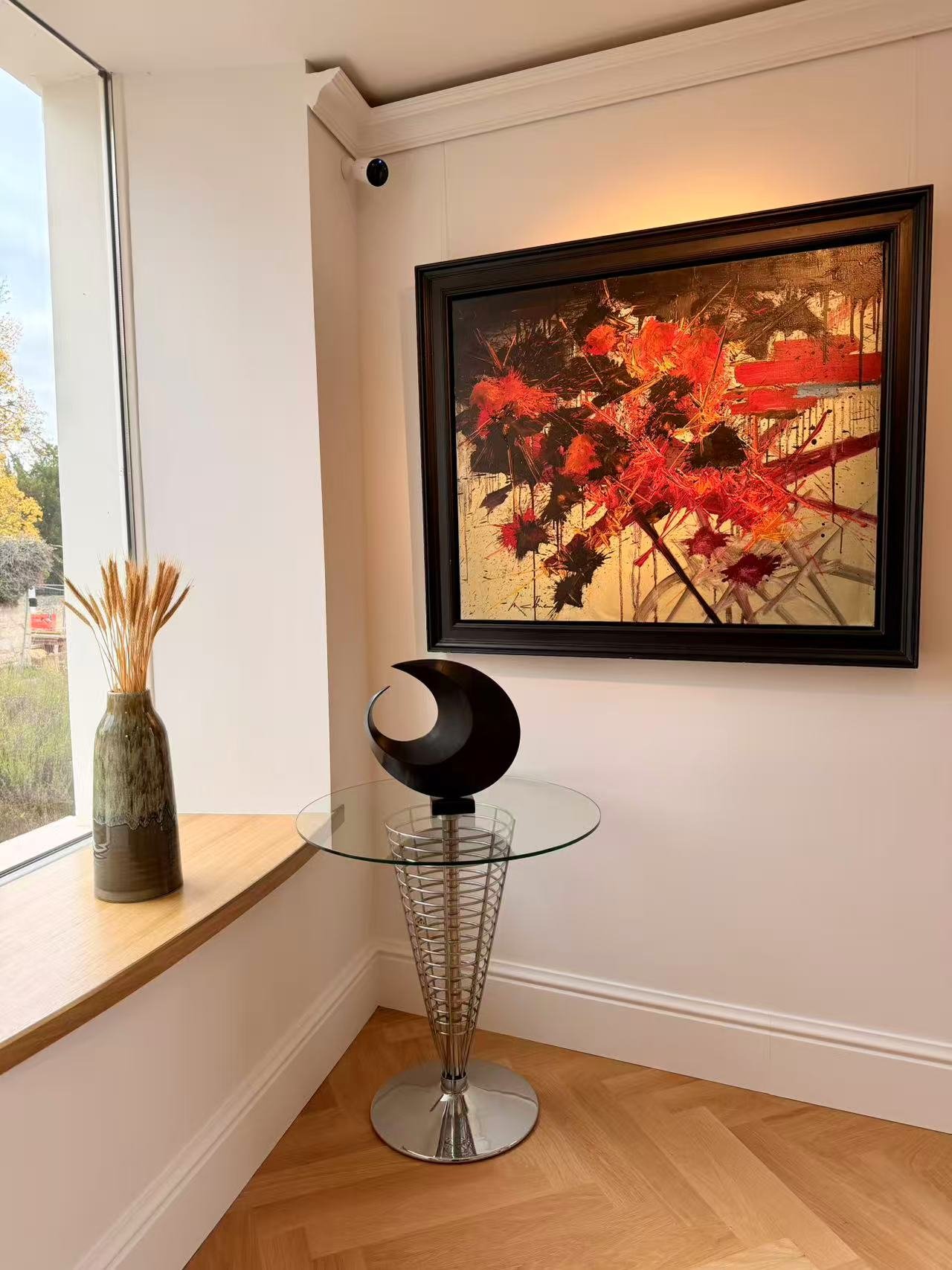
Mathieu can be considered the pioneer of happenings and public performances, well before the 1960s, the first proponent of risk and speed in painting, and the inventor of a new abstract and intuitive calligraphy. His works often bear titles referencing great battles and historical royals, including Le Grand Dauphin (1960) and Souvenir de la Maison d'Autriche.
Beyond painting, Mathieu was a prolific theorist, authoring books such as De l'abstrait au possible (From the Abstract to the Possible) and Au-delà du tachisme (Beyond Tachism). In the 1960s and 1970s, he extended his practice to applied arts, creating furniture, tapestries, jewellery, posters, and even designing the ten-franc coin for the Monnaie de Paris (printed between 1974 and 1987).
Today, Mathieu's work is held in more than eighty museum collections worldwide, including the Centre Pompidou (Paris), Tate Modern (London), the Museum of Modern Art (New York), the Solomon R. Guggenheim Museum (New York), the Art Institute of Chicago, the Museum of Contemporary Art (Los Angeles), the Hirshhorn Museum and Sculpture Garden (Washington, DC), Kunstmuseum Basel, and Kunsthaus Zürich, among others.