Early Life and Artistic Formation
Born in Frèsne Saint-Mamès (Haute-Saône) to Nicolas Schuffenecker, a tailor hailing from Guewenheim (Alsace), Émile’s childhood was marked by tragedy when his father succumbed to tuberculosis shortly after his birth. His mother remarried, relocating to Meudon, near Paris, where she found employment at a laundry and fostered connections with her maternal family. Educated by the frères des écoles chrétiennes, Schuffenecker embarked on a career path that intertwined commerce and artistic pursuits—working initially in his uncle’s chocolate and coffee-roasting facility before securing a position at Bertin, the prestigious Parisian broker. It was here he forged an enduring friendship with Paul Gauguin, sharing a passion for studying Old Masters at the Louvre and honing their skills at the Académie Colarossi. This formative period instilled in Schuffenecker a profound appreciation for Impressionist aesthetics and established him as a key figure within the bohemian circles of Paris.
The Influence of Gauguin and Van Gogh
Schuffenecker’s artistic sensibilities were decisively shaped by his relationship with Gauguin, whose bold experimentation with color and form served as an inspiration. However, Schuffenecker's gaze was particularly captivated by Vincent van Gogh—a fascination that extended beyond mere admiration for stylistic innovation. He became one of the earliest collectors of Van Gogh’s paintings, demonstrating a genuine enthusiasm for the artist’s expressive vision and unwavering commitment to capturing the essence of nature. This devotion fueled his own artistic explorations, resulting in landscapes imbued with atmospheric haze and luminous color palettes—a direct reflection of Van Gogh's groundbreaking techniques.
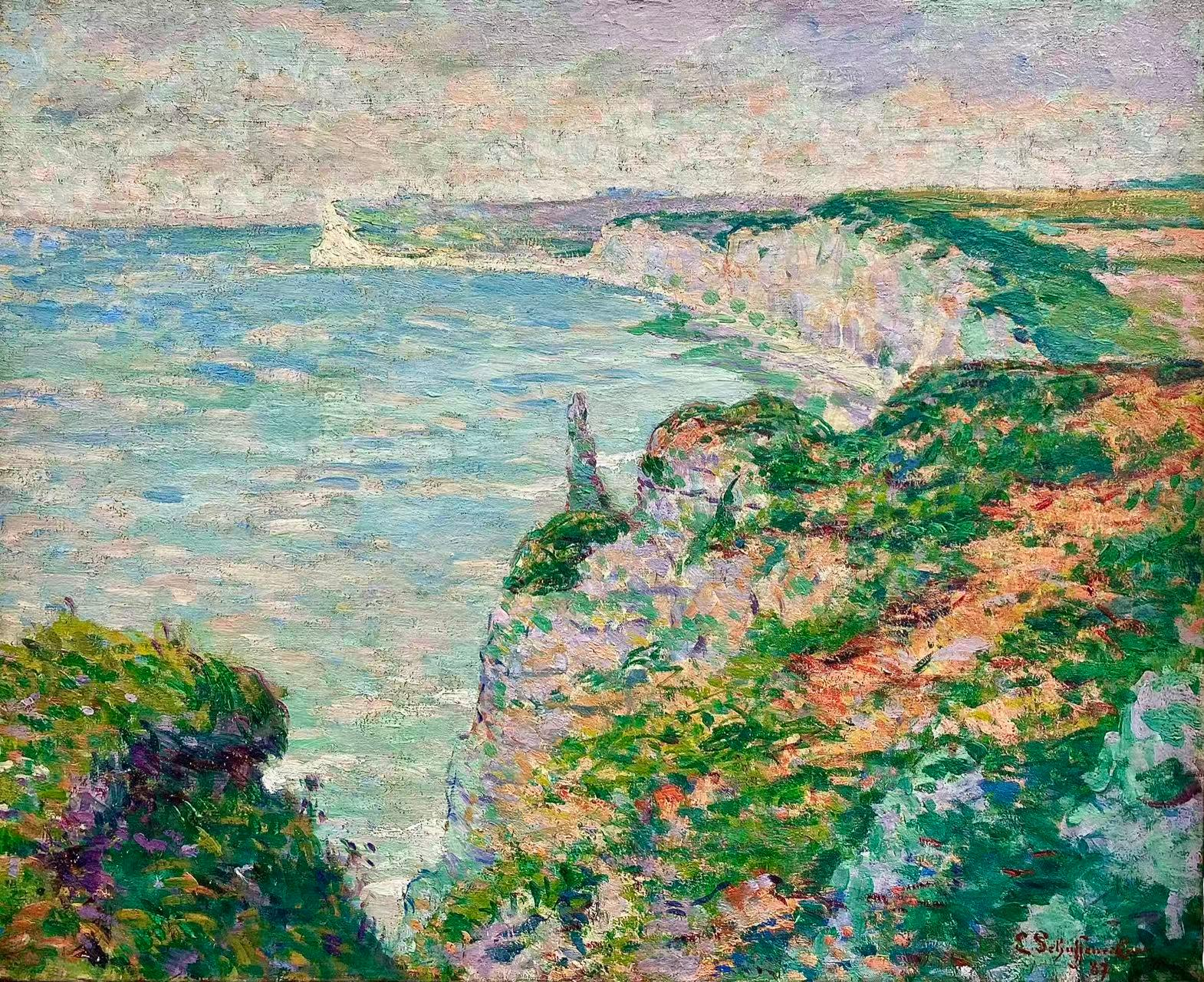
Claude Emile SCHUFFENECKER (1851-1934)
Falaise d'Etretat ,1887,Huile sur toile,50 x 60 cm
Signée en bas à droite