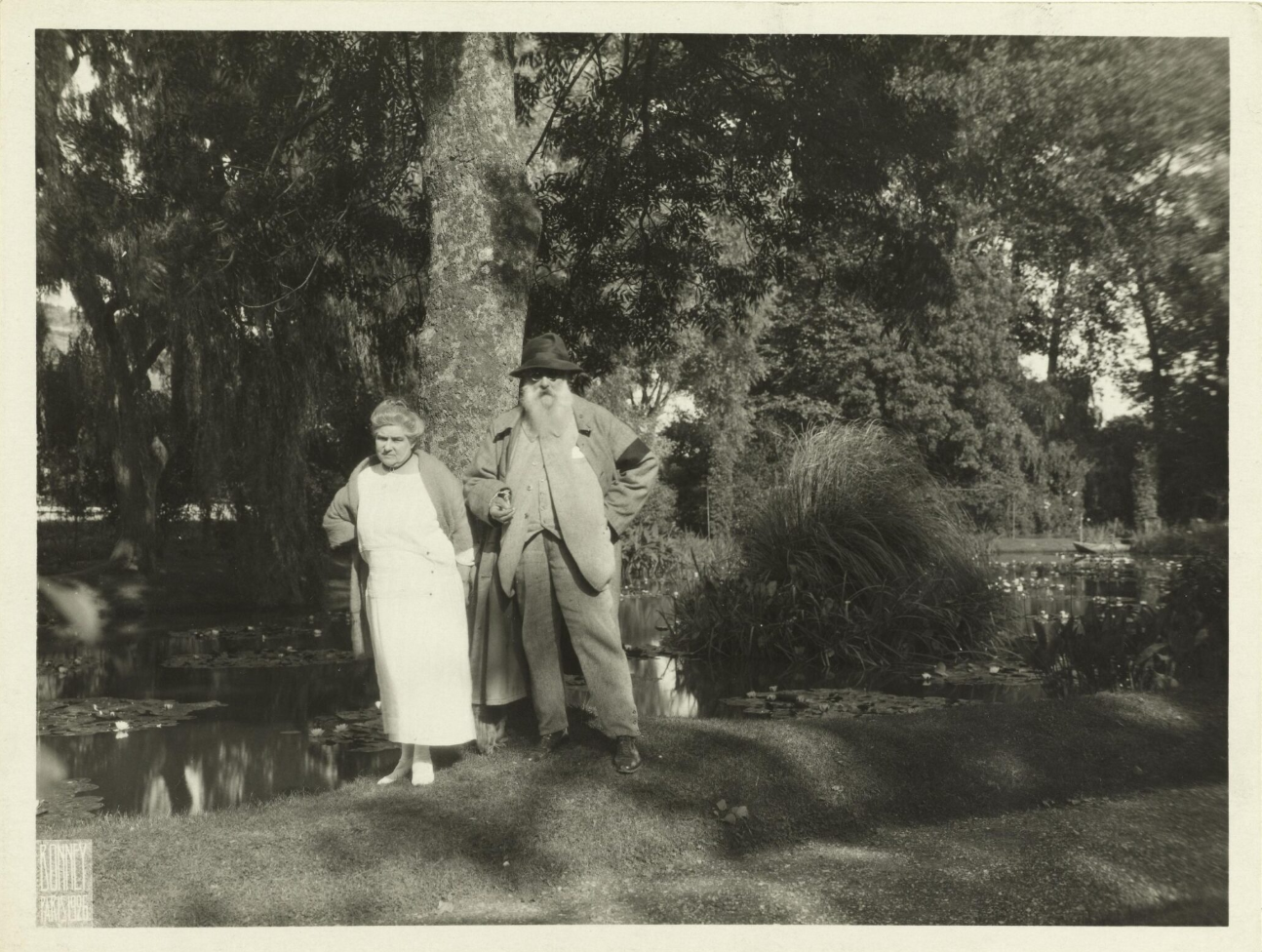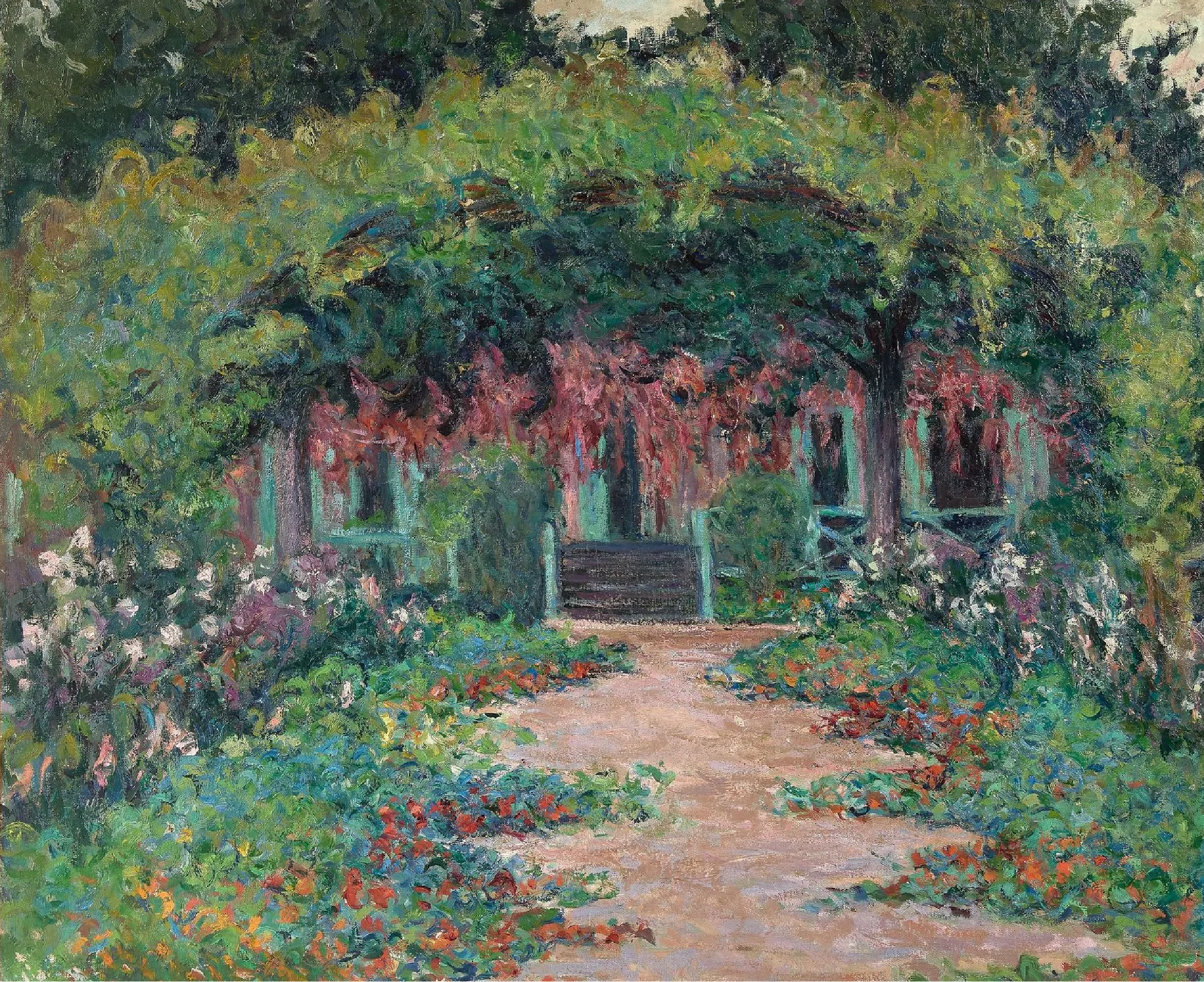
Blanche HOSCHÉDÉ-MONET (1865-1947)
La grande allée du jardin de Monet à Giverny
Huile sur toile
60 x 73 cm
Provenance :
Charles Jacob levy Collection (1872-1961)
Collection Leon Herzog (1899-1968) and - Simone Herzog nee levy (1903-2004)
Then by descent
Related works:
Giverny garden (the alley of roses), oil on canvas, undated, Clemenceau museum, Paris
Monet's garden and house in Giverny, oil on canvas, undated, musee des Augustins, Toulouse
The garden, undated, oil on canvas, London auction, Christie's, 10.02.2011
Bibliography of related works:
Hubert Piguet, Blanche Hoschedé-Monet (1865-1947) Impressionist painter, Ed. Académie des Sciences, Belles-Lettres et Arts de Rouen, Rouen, 1986.
Philippe Piguet, Blanche Hoschedé-Monet, un destin impressionniste, Musée de Louviers/éditions Points de vue, 2010.
Philippe Piguet, Blanche Hoschedé-Monet, catalogue d’exposition, Musée de Vernon, 2017.
Blanche Hoschedé-Monet in the light, catalogue exposition Eskenazi Museum of Art, Bloomington (USA), 2025.
A certificate of attribution from Mr. Philippe Piguet which will include the work in the N°BHM12-4 dated January 26, 2026 will be remi s to the purchaser.
Blanche Hoschedé-Monet :
The daughter of a prominent art collector, Blanche Hoschedé-Monet grew up in the very midst of the Impressionist movement, surrounded by its revolutionary artists and ideas. In fact, it was her father who would purchase Claude Monet’s Impression, Sunrise (1872)—the painting that ultimately gave the Impressionist movement its name.
Often recognized as Monet’s stepdaughter (and subsequently daughter-in-law, after marrying his eldest son Jean), Hoschedé-Monet was a talented artist in her own right. She began painting at the age of 11 and developed a close relationship with Monet as the only one of his children to take up painting. By the time she was 17, she was Monet’s assistant and sole student. The two shared a passion for painting and could often be found working alongside one another en plein air (outdoors).
Hoschedé-Monet and her stepfather maintained a collaborative working relationship marked by ease and mutual regard. Instead of imitating one another, their works provide complementary perspectives, each distinct yet harmonious.
Hoschedé-Monet’s work offers a rare female perspective within Impressionism, capturing nature’s transient beauty with a refined, lyrical touch. Giverny provided an especially supportive environment for women artists, many of whom were making significant strides in education and gaining visibility through exhibitions at the time. Monet held Hoschedé-Monet in high esteem and valued her work, training her and encouraging her to submit her work to the Salon. Art dealer Paul Durand-Ruel purchased Haystack from Hoschedé-Monet, which currently hangs in Monet’s house in Giverny.